Welcome to My Blog

The default template for Blogspot blogs displays a blog's description on each page. This gives you an opportunity to increase the density of your blog's primary keywords and keyword phrases. If you write a keyword-rich blog description, however, you may prefer for your readers not to see it while still making it available for search engines to scan. Modify your blog's template to hide the description of your blog while keeping it in the source code.

Good Day..

Tuesday, June 3, 2014

Advertising, Branding and Promotions With Using Roll Up Banner

The advertising, branding and promotions are like oxygen for any business. All companies leverage either one or a mix of display tools to generate awareness while participating in trade shows, seminars or exhibitions. One of the most popular options is the roll up banner stands, also known as retractable banner stands. 

Companies prefer them to other options due to their multiple advantages and helpful features. Simply put, these banners can be placed anywhere and the graphic or the message needs to be just pulled up and affixed. It normally comes in a compact carry case which has the stands, the banner and anything else needed to set it up. Let us focus on understanding the features that make them a prudent and popular choice for many companies.

Roll-up banner stands have the following advantages:

Set-up

Compact, lightweight and takes minutes to set up. What else would one need in a busy schedule of trade shows and exhibitions? You just need to choose the display location and the assembling and installing the retractable banners takes few minutes. You need to take the different parts from its case, affix the height of the stand, lock it on the spot and just pull up the banners. You are open for business now. Another factor which is very appealing is that anyone can do it, and you need not spend effort and extra money on appointing labor to set it up.

Portable

The design of roll-up display banner stand is very user-friendly. It is lightweight and compact so it is easy to carry it around, store anywhere and transporting it is no hassle at all. You can easily store it in its carry case which also acts like a storage case anywhere till your next exhibition. They are sleek and slender; hence very hassle free maintenance is required.

High return on investment

Easy to set up, portable, creative and durable-these qualities make the retractable roll up banner stands a good long-term investment for any business. Cost effective to maintain, create and operate makes them valuable assets. They last for many years to come, hence helping you cut down on additional operational expenses, leading to an increase in your promotional budget.

Multi-purpose

One of the most attractive features of the roll-up banner stands is the fact that they are multipurpose in deployment. Versatile, they can be used for external and internal events very easily. They are creative and are popular at trade shows, exhibitions, conferences, sidewalks, malls, sales etc.

Variety of options

Roll-up Banner Stands Suppliers can provide you with multiple options in terms of sizes and various materials for the retractable banners like vinyl, cloth or canvas. This gives you the flexibility to experiment with creative designs and the banners can be custom made to sync in with your message and promotional activity.

Simple and comprehensive

Stretch Roller Banner Stands are simple and uncomplicated options to display your message or branding.

Sunday, June 1, 2014

Available For Best Accounting Service

Challenging world of accounting means that you are like an ant to the world of giants. Sure, you got your degree but every clear minded individual knows that it is the real world where you grow and develop your skills, knowledge and expertise. The same logic applies to accounting when it comes to managing your books, writing off pay cheques, balancing spreadsheets and recording multiple transactions. If you have no backhand or preliminary knowledge or something, you may not even last a day in the professional field.

That is why for your accounting convenience, we have prepared a list of the best accounting services tips that will you get started on the right track:

Basics of bookkeeping

Not so confident about taking up the task for bookkeeping, then you could always ask a business friend or an actual bookkeeper. However, in case of an emergency or sickness, it is imperative that you brush up on your best accounting services basics for it may save your life when you least expect it.

Making a petty cash fund

Small expenses or even unexpected ones are avoidable with this best accounting service tip. They are small because they do not necessarily require the need to write off any cheques or the use of credit cards. That includes buying pens, staples or cleaning supplies. You should document every purchase that is made with fund and replenish when required. Keep in mind to do some extra counting in order to ensure that the amounts are balanced out on both ends.

Make it simple

This best accounting service tip shows that you must keep your record keeping methods simple and to the point. As your work with your industry you will be able to learn, adapt and develop experience that will help construct exceptional best accounting services. Taking on the situation head on without a base or a plan is simply betting all your chips in one go and failing.

Traditional and contemporary bookkeeping methods

Managing your books using a pencil may be years out of style but it still works. Electronic bookkeeping is fast but at times without the human element of revision, can draw out some nasty results such as inaccurate balance sheets and more. Using a paper assures more credibility about the accuracy of your results.

Saturday, May 31, 2014

What you need to do proposal or grant application?

The planning to hire a proposal writer to create your next proposal or grant application? As is true with any writing project, hiring a professional writer can save you a lot of time and stress. However, working with a pro still requires your input and organizational skills. To be sure that your proposal project will progress as efficiently as possible, you should consider the following questions before you interview a professional writer for the job.

All too often someone is tasked with writing a business proposal with an extremely tight deadline and their first thought is to hire someone to write it for them. Most of these cases result in the proposal writer rejecting them as a client because they are not prepared with the information that the writer would need to complete the project. These fast turnaround proposals more often than not require you to write it yourself - and this is where a pre-designed proposal writing package such as a proposal kit will help you get it done faster.

What is Your Goal?

Are you responding to an RFP and have to submit a PDF in a certain format? Do you want a beautiful printed proposal to present at a board meeting? Be sure you can tell the writer the deadline and the final format and describe the audience who will read the proposal.

What Do You Expect the Proposal Writer to Do?

This might seem self-evident - of course you want that person to write your proposal. But do you also expect the writer to lay out the pages and produce the final PDF or printed document? Do you expect the writer to create graphs or charts or other visual pieces? Do you want the writer to create an appealing cover? Do you expect the writer to manage the review process and consider comments from others?

How Much Are You Willing to Pay?

Writers come with differing levels of experience and expertise. You could always take the cheapest route and hire your cousin John who has written research papers in college, but odds are that he will create many more drafts and take much longer than an experienced proposal writer.

With a professional writer, you may be able to negotiate a flat rate for your proposal or a Not-to-Exceed rate, but in that case, the writer is likely to insist on a contract that spells out the terms of the job, and if you change anything or don't fulfill your responsibilities in a timely fashion, the writer may insist on renegotiating the contract. Most experienced writers expect to be paid by the hour. Writers who work in highly specialized fields may command a high hourly rate of pay, but odds are that they will save you time during the course of the project. If you expect the writer to manage the whole project, you should expect to pay a higher rate.

What Does the Writer Have to Work With?

In other words, where is all the information that needs to go into the proposal? Do you already have documents and digitized visual elements that can be included or that the writer can use as reference material? Or is the information that will go into the proposal all contained in the brains or laptops of various individuals, such as marketers or managers? If that's the case, the writer will need to schedule interviews with all the people who have the data needed for the proposal.

Do you have an example of a proposal your organization has submitted in the past that the writer can use for reference? In the best case scenario, you should be able to hand the write an outline for the proposal along with a sample proposal and a list of computer files containing the information needed to fill in the outline. At the very least, you should be ready to hand the writer a list of important points that must be covered in the proposal, as well as the names of people to interview to get all the needed information.

You also need to consider tools - does the writer need a desk and computer at your place of business? How about software? Do you have specific templates or proposal software that you want the writer to use? Starting off with a specialized package like a proposal kit can make the writing much more efficient because they contain instructions, examples, and sample proposals. A proposal kit will also help guarantee that the writer produces organized and professional-looking pages and an accurate table of contents.

What is the Schedule?

The time needed to create a proposal depends on how complex the proposal is, how many people need to participate, and how organized everyone is.

Things to consider for the schedule are:

Research time
First draft writing time
First draft review time
Second draft and incorporating comments
Final review
Changes from final review
Final proofread of all pages
Production of PDF and/or printed proposal


If the writer starts with the needed information in hand, the research time will be negligible. If the writer must collect all the data from multiple individuals, the research process will obviously take a while. If you have handed the writer an outline for your proposal, that will make writing the first draft more efficient than if the writer needs to "wing it." Here again, a pre-designed proposal kit can help with ideas and examples about the best organization for successful proposals.

Every proposal needs at least one review and one final proofread. For a very simple proposal, this might take only an hour or two. But if your project is complicated and has many sections, you probably have a whole list of reviewers whom you want to approve the proposal, and a review could take days or even weeks. Complex proposals may require several review cycles. Be sure to inform all reviewers about the date on which they will receive the draft proposal and the date you need all comments back from them. You might find it efficient to break the proposal into parts so that the expert for one part can review that section while the writer progresses on other sections. 

In any case, after each review is handed in, you need to allow time for the writer to consider and incorporate comments before circulating the next draft. When all reviewers are satisfied, then it's time for a final proofread before creating the PDF or proposal you will hand off to your client or grant committee. The final proofreader should be someone other than the proposal writer.

To sum up, the more organized you are before you hire a proposal writer, the faster the writing project will go. When you have answers to all the questions posed above, you should have no difficulty hiring a writer and efficiently managing your proposal project.

Thursday, February 6, 2014

Building Information Modelling 3D (BIM) Real Needs

The concept of building information modelling (BIM) has received universal acceptance from the building services, structural engineering and architectural fraternity mainly due to its need for lean construction and also its cross-disciplinary usability. 3D BIM modeling has existed for a number of years now and the industry is aggressively adapting itself to embrace the new work flows of the BIM process; however, there is still a lack of clarity amongst the owners (the clients) as to what exactly they can achieve from these models, what they need to achieve and how they can make optimum use of this concept.

This article seeks to explore some beliefs related to the use of BIM and sheds light on when it should be used and to what extent. For the sake of clarity, it is important to know the difference between non-BIM 3D CAD models and a parametric BIM models.

3D CAD models are virtual representations of a facility that provide only visual details. Applications such as AutoCAD Architecture and AutoCAD MEP are used to create 3D CAD models that can be used for design, development, construction and pre-fabrication. On the other hand, BIM models are intelligent models embedded with parametric details that are extremely important for design, development, construction, pre-fabrication, assembly, analysing energy performance and facility management of the built environment. For BIM projects, the details can be effectively shared between different project stakeholders: facility owners, designers/architects, MEP (M&E) engineers, fabricators, consultants and contractors. Revit Architecture and Revit MEP are applications used for BIM modelling whilst Navisworks is employed to detect clashes between different system models. 

One of the most crucial aspects that helps decide whether BIM is actually required or not is gaining an in-depth understanding of the model's purpose. More often than not, there is so much difference between client's 'stated' needs and his/her 'real' needs. In a lot of cases, clients state that they require a BIM model but actually what they require is a smart clash-free 3D model which can be used to extract respective construction drawings. In such scenarios, AutoCAD MEP or AutoCAD Architecture could easily be used to provide a 3D model that meets this need. Alternatively, a BIM software tool could be used to provide a 3D model without providing additional elements such as data rich 'information'.

In other cases, a BIM model may actually be the basis to plan, design, construct, and manage a particular facility. These scenarios require multidisciplinary project stakeholders to access the BIM model at different stages in the project life cycle. As a result, the most important factor that dictates the success of any project employing BIM is the richness of 'information' embedded into the models.

 So, depending on the project's scope, a full-fledged BIM model may contain valuable information, such as dimensions of building elements, quantity take-off data, material requirements, time scheduling, costing, prefabrication data, activity simulation, and energy performance. Other important factors that contribute to success of BIM include the data-sharing and interoperability standards to allow smooth multidisciplinary collaboration between key disciplines.
Irrespective of whether the client actually requires BIM or non-BIM CAD model, the BIM wave that has spread across the AEC industry has forced the agenda to adopt a more progressive approach to planning, designing and coordinating models and drawings. 

The industry continues to transition from non-BIM 2D approaches to collaborative BIM work flows and 3D CAD work flows and even that is a huge shift for the industry. This change is more often than not influenced by the demand side i.e. the clients.

Wednesday, February 5, 2014

Today Business And New Economic Conditions

I discussed a new economic reality and what companies can do to preserve jobs in a down economy. As I continue addressing this issue with former CEOs, I find myself peeling the subject in layers as though peeling an onion.

As I have stated in the past, it is easy to layoff people or close manufacturing plants when the economy slows. It seems our business schools have not considered another possibility and we are perpetually stuck with laying people off to preserve profits.

At the same time, when you examine closely, you see this method is extremely unprofitable. Why? When you layoff a percentage of people to save a million dollars, for example, you don't openly discuss the repercussions. If your enterprise is to remain a going concern, you will eventually have to hire people to fill those vacant positions. When you rehire, you have to factor in the associated costs to fill the position. You have to advertise for the positions. 

You interview candidates which is time and then you train those people. The real dollar costs could be $3 million on a $1 million savings. That does not factor the intangible costs of lower quality customer experience that tarnishes your brand because former employees may have had better knowledge of customers' needs. As the layoff strategy incurs costs greater than the savings, it makes sense for many leaders to orchestrate financial engineering to hide the backlash of the unprofitable layoff strategy.

As an alternative strategy, consider the horse and buggy industry. As the proliferation of automobiles continued in the late 1800s, those horse and buggy companies changed their model. They started manufacturing cars. In this example, the move was reactionary. As technology and outsourcing continue to encroach on today's industries, a proactive plan is needed.

In another example, with the expansion of the digital age, paper manufacturers may be squeezed. Instead of shutting down plants, transform plants or look for new business abroad. As people use less paper and third world countries increase prosperity, new needs will arise. Furthermore, the global population continues to grow. Therefore, one opportunity for a paper mill is to transform the facility in whole or part from paper for newspapers and periodicals to toilet paper. This is an area technology cannot easily replace. In fact, with an increase in population and more countries participating in global commerce, this commodity will experience increased demand.

 However, this should not be a reactionary strategy like the horse and buggy companies. To thrive as your current industry dies, you should have your employees participate in this strategy. Have production look at the necessary equipment to make the change.
Sales and marketing should be researching new markets in the US and abroad. They should be talking to current and prospective customers as well as distributors and suppliers. In addition, it may be worthwhile to invest in training for key personnel in the targeted commodity.

If  leadership takes on the mindset that they are constantly training employees to mitigate the risks of a dying or transforming industry, they will have to think about training staff and management to perform in new territory. Even if your industry is bulletproof, it would be wise to use this strategy to navigate through recessions. That way you are less likely to fall into the cycle of laying people off and later filling the position with someone else. There are always new opportunities that can be exploited when faced with chaos. 

Tuesday, February 4, 2014

Difficult to Selection of Training Institutes

Famous and running a company can be a tough job at times for individuals. To ease this problem what one can do is to look for options to solving them. One such problem solving method is the imparting of knowledge to the employees and making them ready to face challenges at work. There are many institutions which offer such services to the companies. Making the selection of such training institutions must be done judiciously to get the best people to teach the students.

There are many institutions which offer such safety training services to the people. When you are making the selection of the institute, check for the reputation of the institute. This is important as or else you will be wasting the money on a not so good institute. They also will not be able to teach the students well. Hence one can check with the older clients and also online for reports on the services that they offer to the people. This will enrich their knowledge considerably.

The next thing to check in institutes which offers inspection services to the people is for the people who will be imparting the education. This is of prime interest as they must have a good idea of what they will be teaching so that they will be enriching the knowledge of the students. 

One can check the website of the company and also the credentials of the people teaching there. This will enable them the company owners to understand whether they will be getting the right amount of training from the people.
Another factor to keep in mind is the fact what charge the institute will be taking from the people. This is also of much importance. The institute must be contacted beforehand to know about the charges. The company which will be employing the institute must bear in mind the fact or else they may be facing problem in future. They can also check with a few other companies to understand this issue in a better manner. This is important as this will also decide the company expenditure. Hence understanding such issues beforehand is a good idea for most individuals.
One must also check for the fact whether the training modules have been updated by the training institute. The recent trends must b incorporated in the study modules so as to give the people the best of knowledge. The company must be checked to see whether they keep on updating the contents of the modules with the passing of time. This will help the students to get updated knowledge.

Therefore these are some of the basic things to keep in mind while making the selection of the institutes. that will be offering training services to the people and choice.

Monday, February 3, 2014

Importance Of Having Vision And Mission In Your Business Goals


You have growth in some new task you have recently taken on, it is important to have a vision of not only what the outcome will look like, but also the methods and means you are going to employ to get there.

It might not be good enough to just say you have a vision of having a house that is paid off. Instead you need to be specific to mention exactly what that house is going to look like.

Does if have a wooden door, or a prefabricated plastic one?

Do the windows have internal blinds, or are you going to have them totally clear.

The more specific you can be in your vision, the clearer your path will be in order to achieve it.

If you are looking to build a business that remains your own compared to having multiple employees, or virtual ones for that matter, you need to be able to manage your time in addition the expenses required to do this.
Items that should be considered to get you on the right path to your ideal business might include you coming up with an overview of what your ideal day might look like.

If you can visualize what you would be doing from the time you get up until the time you went to bed again, you are going to become more focused on having that daily experience happen in reality.

Now keep in mind even in the ideal situation there will always be bumps in the road so the more flexible you are and willing to get back up with failure, the more likely you are to reach that vision of the successful life you want to lead.

People and businesses who lack a vision may continue to make sales and seem successful, though they might not ever grow beyond the scope of what is a possibility. Instead of being a million dollar a month company, perhaps they only are making 50 thousand dollars.
I know many people would love to make 50 grand a month, though with the proper vision and taking action, or implementing specific tasks, this can be scaled over time.

Everyone has a different vision and if you are working with a team, it is important to come up with a vision that best suites the needs and desires of all parties involved.

Be confident in what you want and visualize yourself while keeping an abundance mindset. You can always revise as you act and new challenges come your way, though the more you focus on what you had planned from the beginning, the more likely you are to achieve it.

Sunday, February 2, 2014

5 Key With Successful Incentive Travel Program

Although we have written volumes about the value of travel incentives, it is important to remember how many business objectives and return on investment initiatives are actually achieved when these programs are implemented correctly. Incentive travel is vital to maximizing relationships and profitability with your three key audiences: customers, channel sales affiliates, and employees. Increased customer loyalty, higher sales revenues and reduced employee turnover are the three prominent goals that travel incentives can achieve for you.

Executing a successful program however is extremely difficult. Melissa Van Dyke, President of the Incentive Research Foundation, has drawn on 20 years of expertise and feedback from industry executives to compile five keys to success for incentive travel programs in a recent issue of The Meeting Magazines.

1. Communication is key

When asked about what could lead a program to fail, the most common response was substandard communication efforts. This has been our experience as well. Too often marketing the program effectively and allocating a proper budget to do so takes a low priority in the overall travel incentive program budget. Poor timing, an already stretched budget and mundane emails to promote a program are all recipes for disaster. Many companies incorrectly expect a few text-heavy emails devoid of enthusiasm or exciting imagery to suffice.
 
Communication must be a top priority, not an afterthought, to properly motivate and achieve incremental performance and participant buy in. Understanding the exact steps the participants must take to receive the trip, their progress and standings in relation to others and how close they are to ultimately winning the prize need to be clearly communicated as the program progresses. Crystal clear communication is only the beginning however.

These communication pieces must also be inspiring and eye-catching. The communication channels must vary to catch the attention of even the most mobile sales person. The majority of the world has an attention deficit disorder in this age of instant gratification, social media and information overload. It is imperative to break through with compelling graphics, crafty language, strategic deployment and proper communication medium selection.
 
2. Visible management is a must

Management must ensure that their best producers feel like their efforts are recognized, appreciated, and valued. Top performers don't typically expect or crave a formal award ceremony, but they are appreciative when managers show up on site at events and interact with them in meaningful ways.

3. Culture is crucial

The program should be a direct reflection of your corporate culture. Just as the branding and marketing collateral of your company should fit the values of your organization, so should the incentive travel programs. A young, conservative company's trip should differ greatly from that of a conservative firm comprised of older individuals.

4. Fairness is fundamental

To properly motivate participants, rules should be easy to understand and perceived as fair. The way the brain processes perceived unfairness is similar to the way it reacts to a threat to one's life. Your contest should be challenging, yet fair and clearly communicated.

5. Lead with location
The biggest draw of your incentive travel program will be the location, plain and simple. Selecting a destination that resonates with your target audience is crucial. Emphasizing the great qualities of your destination should be obvious, but many fail to realize that this is aspect of the trip that speaks to participants the loudest. While management speaks in dollars and cents, participants have their eyes on the prize and respond to visual imagery and descriptive language about the destination.

Does your current incentive travel program address all five keys to success adequately? Do you see room to improve?

Don't have a program in place but are thinking of implementing one? Does your company possess the resources to address all 5 keys in-house.

Wednesday, January 29, 2014

Jobs and AC/DC Have in Common?

Do Steve jobs and Ac/Dc. The rock band AC/DC was formed in 1973 sold over 200 million albums. "Back in Black," released in 1980, sold over 50 million copies, second only to "Thriller." 40 years later, spectators from North & South America, Europe, Asia and Africa still flood to their concerts. In 2011, during their latest world tour, close to 200,000 spectators attended a series of 3 concerts in River Plate, Argentina. We are in 2014, the members of the band are in their late fifties, early sixties. They are still rocking. What is their secret?

Steve Jobs created Apple in 1976, co-invented the first personal computer selling over 210 million units. He then went on inventing and selling 350 million iPods, 200 million iPhones, and 100 million iPads. In the process, he also revolutionized the music industry with iTunes. Close to 40 years later, even though Steve Jobs is not among us any longer, Apple is still rocking. What was his secret?

The secret is that both AC/DC and Steve Jobs shared the same philosophy...

1. They both had a clear understanding of what their company/band was about.
2. They both had a clear understanding of their "niche" and never compromised.
3. They both sold an "experience," not a product.
4. They both were the master at creating a strategy that was perceived positively.

"AC/DC and Steve Jobs realized long before "Social Media" existed, that to have sustainable success in whatever industry you are, you must sell more than just innovative quality products. They understood that they had to connect their brand with their customers, at an emotional level. That their ability to build personal relationships would be the deciding factor."

The "Social Media" revolution gives you the opportunity to apply the same principles to your business, emotionalizing your brand building personal relationships with your ecosystem.

- The name is "Emotional Branding"
- The key is "Content Marketing"
- The tools are "Social Media" platforms
- The beauty of it, is that it is "Affordable"
Consumers of all types, in all industries, are people who want to feel "Positive Emotions" before anything else. Your branding strategy must be designed to create a personal dialog with them.

"Branding is not about market share, it is about mind & emotions share."

Tuesday, January 28, 2014

Four Trends in Architectural Design


Pays to know what people are currently after. There are a lot of new trends taking place and you can encompass them within your own designs. Finding an architect that is familiar with these trends and that have embraced them in their own designs can help you dramatically to ensure you are satisfied with the ultimate design created for you.
 
Large Open Spaces

When you are looking at a new design, you want to take into consideration the amount of space that you have in a room or lobby. Large open spaces are highly desirable because it allows people to sit back and relax. Whether you are designing a home and you wish for a large living room or you are designing a business with a large lobby, consider the space that you can create both vertically and horizontally. Vaulted ceilings and rooms with a higher square footage can be achieved through your architectural designs.

Easy Access

The days of putting 42 inch upper cabinets in the kitchen are over. People want to obtain easier access to the things that are in their home and in their business. This is a trend that has become very popular and is seen around the globe. While some European companies have focused on easy access for years, many Americans are just realizing the importance of such designs - and they are being seen in more design magazines than ever before.

Convertible Space

It is impossible to know what you will need down the road. When you create an architectural design for yourself, think about how you can convert the space into another room down the line. For example, you may be able to create a unique design that allows you to split the space in half, creating two rooms if you need to do so at some point in the future.

Many hotels are using convertible space within their hotel rooms. This allows people in business to convert the hotel into more of a bedroom/office space when they are going to be spending more than a few days in town. Regardless of what your design is going to be used for, you can talk to an architect about having some kind of convertible space in place.

Eco-Friendly Materials

One architectural design trend that has been in place for several years now is the use of Eco-friendly materials. This is a trend that is not likely to go anywhere because people are becoming more aware of the environment and how they can make an impact. Sustainable and biodegradable materials can be used within your design, reducing the number of natural resources used.

Steel can be incorporated within the design, allowing you to use one of the most recycled products on the planet. You can also use a variety of other products that will last for decades, ensuring that you do not have to replace them frequently.
When you know the trends in architectural design, you can be sure your building is stunning and highly desirable by consumers and those who are looking to buy it in the future.

At Duane Bradshaw Architects, Houston every architectural design project begins with an idea, a concept. Whether we're designing a church, a home addition, a new parking garage or data center.

Monday, January 27, 2014

Latest Farming Equipment For Sale


The nature of farming which requires intensive labor and time expended, many manual farming processes were mechanized to help save time and energy. Over the years more and more processes were automated to help ease hard labor and to lighten the work load of farmers. This is where farming or agricultural equipment comes in. There are different types of agricultural machinery that may be found in the market today. Some categories of the machinery are the following:

Cultivation and Seeding Machines:

These are machines that help prepare the soil for planting such as ploughs and hoes, aerators and cultivators. Ploughs loosen the soil and turn it to prepare the land for planting. Cultivators cut in to the soil lines or grooves where seeds are planted. Machines such as row planters and seed drills are also classified under this. A row planter helps the farmer plant seeds several rows at a time while the seed drill plants seeds and covers the seeds with soil.

Spreaders:

Machines that help farmers fertilize the plants are called spreaders. When liquids such as pesticides and other chemicals are used on plants, the machines used are known as sprayers. These types of equipment help disperse or spread the fertilizers and/or chemicals quickly over a large area of land.

Harvesters:

When the crops are ready to be harvested, machines known as harvesters are utilized. Combines for example harvest grain, pick and clean the crop and even separates the wheat. Other types of harvesters include the bean harvester, potato harvester, maize harvester and many more.

Tractor:

The tractor is the most important equipment in a farm as it helps haul all other farm machines including trailers. It is available in many different sizes to cater to the needs of the farm.

Many different kinds of machinery are now available with some of the machines having very specific uses. Hay balers help gather cut grass and tie them together into neat bales. There are also loaders that help move harvested crops from one place to another.

The machines may also be categorized as self-propelled machinery and/or implements. All of these machines help the farmers in every step in the production of food whether through plants or animals. Each machine has a particular purpose and capacities vary depending on the particular needs of a farmer and on the size and capacity of the farm.

Sunday, January 26, 2014

The Fastest Changing Media Digital Marketing

Media Digital Marketing the fastest changing media among all others. It takes just one minor change by a big fish like Google to send ripples of changes across the media. Thus, periodic analysis of such changes is necessary. At the dawn of  2014, this article discusses the popular trends that rule Digital Marketing so as to facilitate both advertisers and publishers in understanding the exact spots of the hot iron where the hammer is to be brought down. An informal study of the various branches reveals that Digital Marketing is bound to depend on content like never before.

The top three important parts of Digital Marketing according to advertisers and publishers are Content Marketing, Mobile Marketing, and Big Data. Around 29% of the respondents believed Content Marketing will define Digital Marketing in 2014, 15.1% opined Mobile Marketing will see another big leap, while 12.9% said that feeding Big Data into the Internet will determine what the brand takes out of this media. Social CRM came fourth in the ranking with 9% rooting for it as the single most point of focus. Let us now analyze the top three trends that are likely to rule Digital Marketing in 2014.

Content Marketing for ORM

The content posted by, for, and about the brand shall be the biggest determining factor of the reputation which the brand creates for itself in the online world. Digital Marketing has become directly linked with Online Reputation Management (ORM) and the quality of the content has a direct effect on it. As the digital world is the modern method of communication, the online reputation which a brand develops is its image and is shared and communicated. Considering the speed at which information is passed around among the net users, keeping a close watch on the content is important. Content Marketing is no longer just about posting content. It also involves managing the reactions (to be fathomed from the comments) and ensuring that a good online reputation is built and maintained.

Mobile Marketing for Better Targeting

The rate at which Mobile Marketing is developing almost single handedly fuels the growth in the digital world. With more and more users shifting from desktops to handheld devices, it is imperative for a brand to invest in this medium. Some experts even go ahead to predict that Mobile Marketing will one day define the whole process of Digital Marketing. With the speed and capacities of the mobiles improving in leaps and bounds, the above prediction may very well be worth its salt. It lends teeth to the targeting capabilities of Digital Marketing. With Mobile Ads finding a way to even the apps of smart phones, it is necessary to stay in the constant view of the users.

Big Data for Public Relations

Big Data denotes the information on the functions of the business, both structured and unstructured. Such data has traditionally been used for analysis by the brand so that defects and shortcomings can be accurately found out and rectified. Releasing informative data on the net bestows the faith of the users and enhances brand image. For example, if an automobile company conducts a research on the various car segments in the industry and releases the findings on the net, it would affect the potential consumers in 3 definite ways. Firstly, it will help the consumers to determine the best vehicle as per their needs, secondly, it will create goodwill for the brand, and thirdly the trust on the brand will go up.

Along with the above, the Digital Marketing will continue to thrive on SEO (Search Engine Optimization) and SMO (Social Media Optimization). However, the predictions for 2014 make it worthwhile to associate with a Digital Advertising Agency.

Friday, January 24, 2014

Clock Software For Employee Time Tracking Is One Easy

Time clock software for employee time tracking is one easy way to reduce the stress of payroll and free up time for more important tasks that contribute to your bottom line.

There are many strategies for dealing with workplace stress. For some, there may be a need to DE-clutter their work area. For others, cutting some task or resolving some conflict may be the required remedy. Knowing the cause of the stress is important to finding its resolution. A common source of stress is a demanding workload with a lot of strict deadlines. This stress can be amplified when the tasks required are not engaging or even remotely enjoyable.

For those in charge of employee compensation, payroll can be a stressful time. Gathering and sorting all of the employee time sheets, compiling scattered information, resolving employee errors, deciphering illegible markings, and all of the other hassles of payroll can add up to a lot of stress. Time clock software keeps employee time records in a single location. It also prepares reports and makes payroll a breeze.

With time clock software in place, all a manager has to do is open the desired report, and all of the employee time information is compiled and ready for payroll. Many time clock software offerings are compatible with payroll software, so management doesn't even have to transfer information from time sheets to payroll by hand. Depending on the size of your workforce, this could save you significant time.

If you're a busy professional with multiple responsibilities, there's no need to stress over tracking employee time. For a minimal investment, you can obtain a software package that will track it for you. Whether your workforce is large or small, the software will quickly pay itself off in saved time and reduced stress. I'm sure you could think of a myriad of things you'd rather do than spend hours compiling and entering employee time records for payroll.

There are plenty of resources available to help you determine the best time clock software to meet your needs. Look for free trials and online reviews. Many time clock programs will track your accruals of sick time and vacation time as well as regular hours worked. With a free trial, you can compare alternative software offerings, check out all of the features, and find the best software to track your employee time and accruals so you can do more of what you do best.

Hawk eye technology invites you to try Time Click free for 30-days. It is an easy-to-use software solution that will spare you many headaches and save you lots of time.

Thursday, January 23, 2014

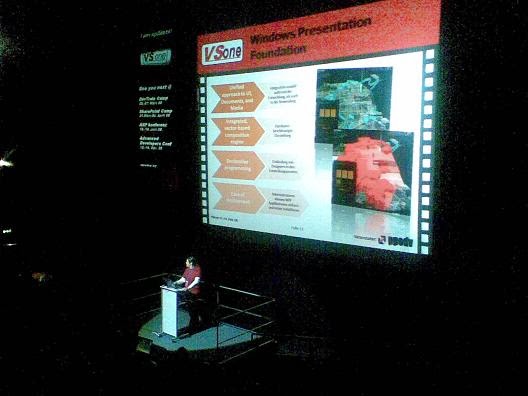
WPF Controls Chart Tools Provide Several Business


Are you planning to cinch that elusive project for quite some time now, then you might want to consider using WPF charts the next time you are assigned to present to a prospective client. WPF chart tools provide several business scenarios which you can use not only to impress the client, but also to make your ideas come across. The platform provides several real-time features that you might want to check out and this article can help you have a brief overview of the platform and why using it can be to your advantage.

Key Features of WPF Charts

If you happen to be more comfortable with the traditional bars/lines or point charts, the platform takes the traditional up a different level. Real time charting and analysis of data or information are made easier with traditional charts available for those who want a more laid back look. For advanced users, they can present the data using 2D charts and 3D charts without compromising data.

In terms of chart types, a presenter has a wide array of chart types that they can use with their project. Aside from bar charts, one also has the option to use line, candlestick and mountain charts in their presentation. Customizations are also available in some WPF platforms allowing one to modify the theme to meet the expectations of the end user.

The platform is also engineered to meet the requirements of users whatever their skill level or.NET platform they may be using. An example would be binding of documents or data from various.NET providers. WPF can bind the data into one project, thus making it easier for various users to work on it without worrying about compatibility issues among software or platform used.

Another issue that seems to crop up during presentation is the inability to update information to reflect real time changes without affecting the whole presentation. With WPF chart controls, presenters can easily download large data files and process these without distressing about changing labels or other problems as the newest data can be immediately uploaded to the chart without affecting the whole presentation. This prevents time waste and improves productivity.

At the end of the day, the best feature that one can maximize with this platform is its intelligent dashboard, which allows the user to have a clean interface while being provided with the necessary tools. Users would find most WPF chart platforms with integrated multi-dimension analysis which makes it easier for one to perform calculations.

Thursday, January 9, 2014

Philanthropic Acts Help Improve And Build Communities

 There are a lot of factors that can affect life and affect one's way of living. Without a stable job, individuals cannot sustain their needs and even the needs of their loved ones, making life much harder. Because of these issues, other problems like illnesses and crimes may be experienced, making the lives of others more miserable. Fortunately, with the philanthropic acts of charitable families and foundations, individuals will have better chances of having a better and more efficient life ahead of them.

How can these philanthropic acts help improve and build communities? Listed below are some of the benefits individuals may obtain with the help of generous and charitable acts of institutions, foundations and caring families.
More job opportunities - Since charitable families and foundations help businesses to expand their ventures, individuals can take advantage of it by looking for the ideal job position for them. Moreover, by having a stable job, individuals will enjoy better features that can help them cater to their needs. Aside from that, businesses can also have better and more efficient services since they can find the right employee who can help them present better services for their clients.

Better health benefits - Some charitable families have also provided better health benefits for individuals. For instance, a children's hospital has been improved to cater to the needs of children. The hospital these days provide effective medical services that include a pediatric trauma center, research facility and enhanced health services.

Better education - Education is also one of the major focus of charitable families and institutions. Their main goal is to educate individuals and provide them better opportunities to have a better life in the future. Aside from that, education can also reduce poverty and lessen the rate of crimes in the community, helping provide better features for individuals and making the community safe.

Help improve businesses - Business owners know that one of the main aspects of owning a business is having sufficient finances. Without sufficient finances, businesses can be closed and employees will be terminated. As a result, some foundations provide help for businesses. They provide services and solutions to cater to the needs of businesses and help them deal with the financial problems. On top of that, some institutions can also help them make their businesses more reputable that can surely entice more potential clients.

Saturday, October 12, 2013

Increasing Traffic Online Marketing Business

Making cash on the Internet, but everything pales in comparison to Internet marketing. Given below are a few simple tips to help you market your product better on the web.

Each Internet Marketer has one main goal: to make as many sales as he or she can make. Learning everything you can about building traffic for your websites is important: it comes before you can make a single sale. You don't want just any traffic; you want traffic that converts. Even though there are literally dozens of different methods to get potential buyers to your site, pay per click marketing is one of the fastest and easiest methods to take advantage of. 

When it comes to PPC, one tip that many Internet marketers find useful is "go one step at a time". For further elaboration, consider this: there are a lot of risks involved in PPC because you will have to spend money for every click you get. To make your PPC campaign a success, all of those clicks need to result in a sale or a lead. In order to find the success you crave, you should do some research before you jump into PPC.

You will have to take each step as it comes and slowly or it could mess things up. Your first decision is whether you have the budget to get into pay per click or not. You are going to have to get used to the idea that, when you are starting out, you will probably lose some money because you lack experience. Third, don't invest all of your money in one go, but instead run a few test campaigns and see how well they're converting. 

Once you figure out which is the best converting campaign, you'll know where to put your money. The bottom line with PPC is, no matter what, don't rush into it. Take some time, do your research and grow your campaigns slowly.

If you want to get successful with Internet marketing, you need to see that promoting products online is something that takes hard work. You must be consistent and you have to work steadily until you find success. The more you delay in taking action, the higher will be your loss of time. 

So it's necessary that you put in the effort to act on the right techniques, learn from your mistakes and above all to get results. You need to be an Internet marketer who isn't afraid to work. You need to ensure you take the proper risks if you want to earn what you want to.

Always to remember to work at your online business full time and not like something to do in your spare time. Many new marketers make the mistake of viewing Internet marketing as a part time work and end up giving it less attention. 

This only makes it more difficult for you, which is why you should treat your Internet business like a successful business in the very beginning of your journey. One of the great things about Internet marketing is that it is so easy for anyone with a computer and Internet connection.

Friday, October 11, 2013

Better And Basic Negotiation Skills Needed In Business

You know everything is negotiable as long as people have the charm and persuasion to make things happen their way. In sines, there is a pressure to get the most out of relationships and get the most value possible out of deals. Understanding the art of negotiation will increase the chance of a favorable outcome for the company.

Being prepared is the most important part of negotiating well. Going in without a plan and thinking it will be like the movies where characters simply wing it will only backfire. It is important to know the audience, what they want, and what questions they could ask. Understand what is driving the party the company is negotiating against where their priorities lie.

Having a response custom tailored for the audience is very helpful in negotiation. Like the previous point, figure out what type of people the company is dealing with and speak in a language the recognize. This is how to push their buttons. There are four kind of basic people to deal with when negotiating.

First is the formal, precise individual who is analytical and needs mass data before a decision can be made. Second is the purposeful, demanding person who is more competitive and intuitive. Third are the caring, relaxed, and patient people who do not rush things. Fourth are the persuasive people who are warm, expressive, and sociable.

Adapting the approach is easier when the businessman understands the different categories of people. The first person needs lots of information. The second just want a summary. The third and fourth types need stories or diagrams. The person negotiating needs to understand themselves as well so they do not butt heads with people of their own kind. 

Believe it or not, listening is an important negotiation factor. Conduct an initial face-to-face meeting before going into specifics. At this meeting, ask the other party what they want out of the negotiation. The more the negotiator says, the more they will give away. This gives the other negotiating party leverage.

Confidence and being mentally prepared before initial meetings is key. 55% of how people communicate is through body language. If the negotiator feels subordinate, the other party will pick up on it and use it against them in negotiation.

Understand that everyone negotiating needs each other. Know the value of the offer and how it helps the other party. This will give enough confidence to clear the head and be in control, taking the lead in questioning.

Avoid being a salesperson. Discussion is key to negotiation as it is how parties reach a mutually agreeable outcome. Instead of saying how much the company can do for the other party, discuss what the company does and offers and ask how it can help the party. Identifying things that are low cost to the company is important to have prepared in case of a trade-off.

Do not be afraid to take a break during negotiations. This time is often needed to collect thoughts and get the negotiator's head back in the game. This time is also used to reconsider the offers on the table. The only time this is not okay is if the negotiator is on an absolute fixed deadline.

Lastly, it is good to understand the company's position and the negotiating party's position as well. Know what the company can get away with (usually the opening bid), what the company expects to get based on market knowledge, and what the deal breakers are. If the relationship with the other party continues after the negotiation, everyone needs to win.

Thursday, October 10, 2013

Content Marketing In Practice Captivate. Convert And Cultivates

Content Marketing that Breaks Through the Barrage of Information

Content marketing is a difference maker. It can help your business stand out from the crowd, generate leads, and nurture customers. That may sound like a tall order. But it's doable.

In today's world, you're saturated with information. There's direct mail, email, web content, Tweets and other social media. All compete for your attention. It's relentless.

Fortunately, useful marketing can help you combat this onslaught. But what exactly is useful marketing? More importantly, how does a marketer write B2B content that captivates prospects, converts customers, and cultivates customers?

Useful marketing meets current and future customer information needs by publishing content on multiple levels that benefits prospects and customers. It builds trust and helps build relationships.

With that in mind, B2B marketing communications must address three conditions.

· Content must be needs-focused and address a targeted audience.

· Communications must be relevant.

· Messaging must be presented in the prospects' and customers' preferred format and platform.

Content that captivates prospects

To break through the mass of information, you must publish B2B content that's compelling. Old media marketing methods like broadcast mass media are out. Personalized marketing is in. You can personalize marketing content with needs-focused messaging that speaks to a targeted audience. This one's a no-brainier. Nothing works better than content focused on a prospect's needs, wants and desires. This re frames selling into problem solving, according to Wordsworth and Holland. It also entails addressing prospects rationally and emotionally. To further personalize content, you must segment your audience. Jay Baer points out in Utility, that meaningful content helps build trust, which keeps customers coming back.

Content that converts customers

Your goal is to convert prospects into leads and leads into customers. Relevant B2B content helps you do that. Relevant content is informative and timely. You accomplish that by narrowing your scope and digging deeper into solving your Leda's pain points. You don't know when your prospect will need your products or services. But providing content that offers a relevant solution in a timely manner will resonate with a prospect. A powerful way to do that is to frame your solution as a story. As Joe Pulizzi said, "A quality story that is told to the right person at the right time will always cut through the clutter." 

Content that cultivates customers

You can cultivate customers and help them move along the buying cycle with content. That includes lead generation, conversion and nurturing customers. To do all of these effectively, you should develop content that considers the way in which your customers consume content. And it must be available where your customers gather. Where do they hang out: on your website, on YouTube, Twitter, or your company blog? Don't forget mobile. A 2011 study commissioned by Google revealed that mobile phone use exceeded PC use. Take the time to uncover how your customers consume their content. Some like print, some like video and others prefer podcast.
Making a difference with B2B content marketing

A properly planned and executed content marketing strategy can get you in front of the competition. Today's new methods put you in control. You can control your message. You can control the type of content you publish. And you can control your content distribution.
And just as important, useful B2B content benefits your prospects and customers. Content that's transparent and engaging builds trust and long-term relationships. You'll establish your business as a "go-to" resource and gain competitive advantage. You'll be "Useful".

Content Marketing has changed the future of marketing.